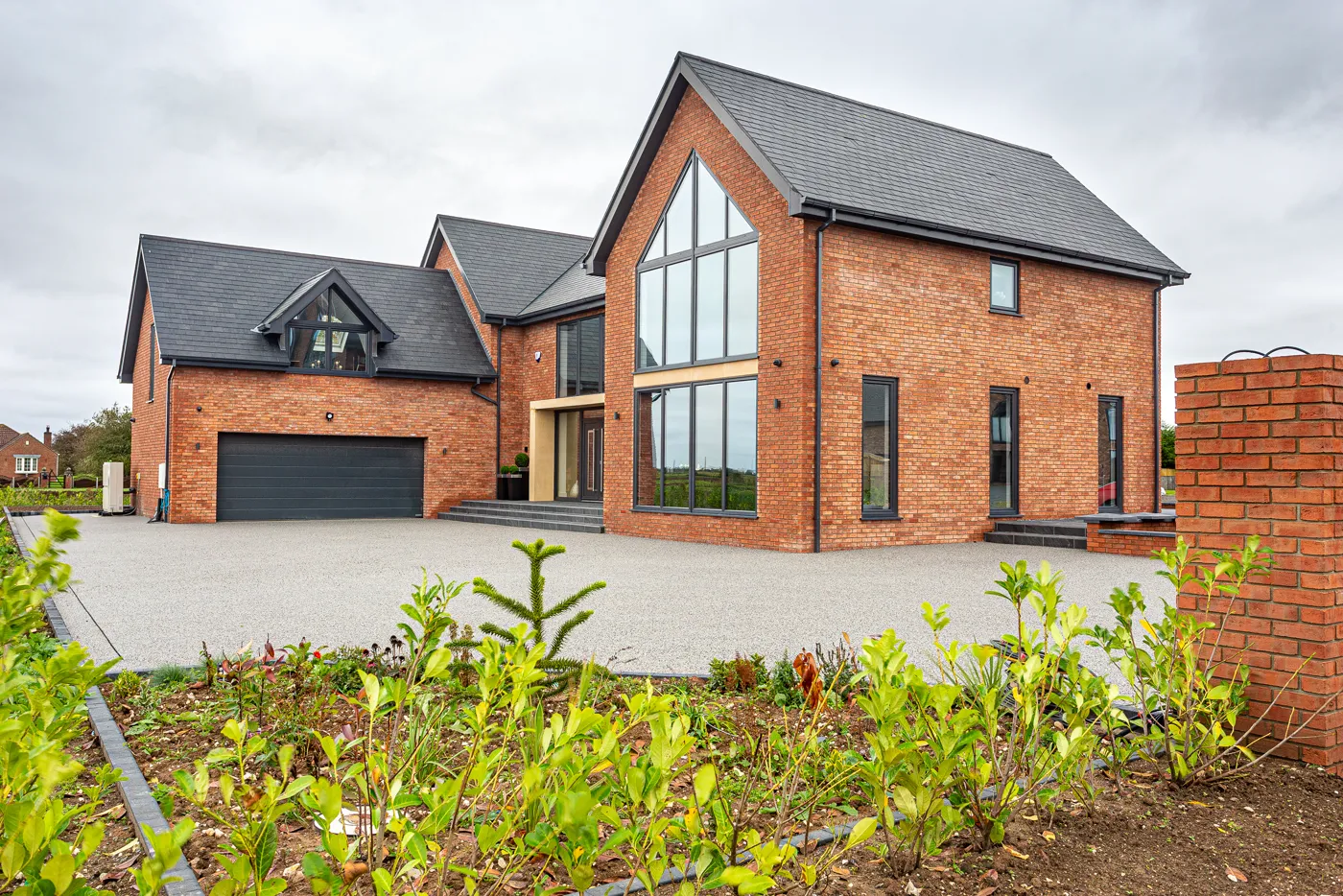
If you’re researching new driveways, you’ve probably come across both “resin bound” and “resin bonded” surfaces. They sound almost identical and look similar in photos, but the two systems are fundamentally different in how they’re installed, how they perform, and how long they last.
As approved Vuba installers who work exclusively with resin bound, we see the confusion regularly. Here’s the honest breakdown.
How Resin Bound Works
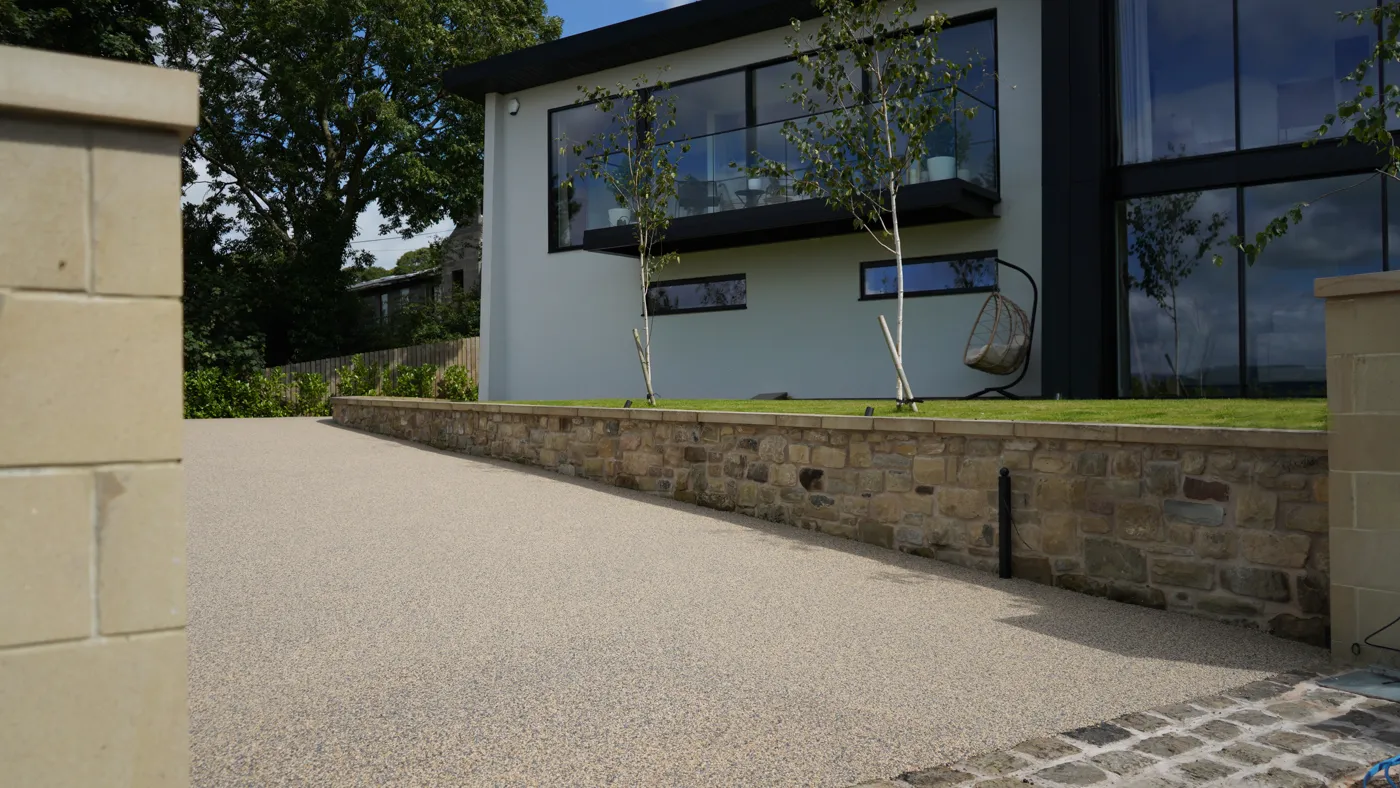
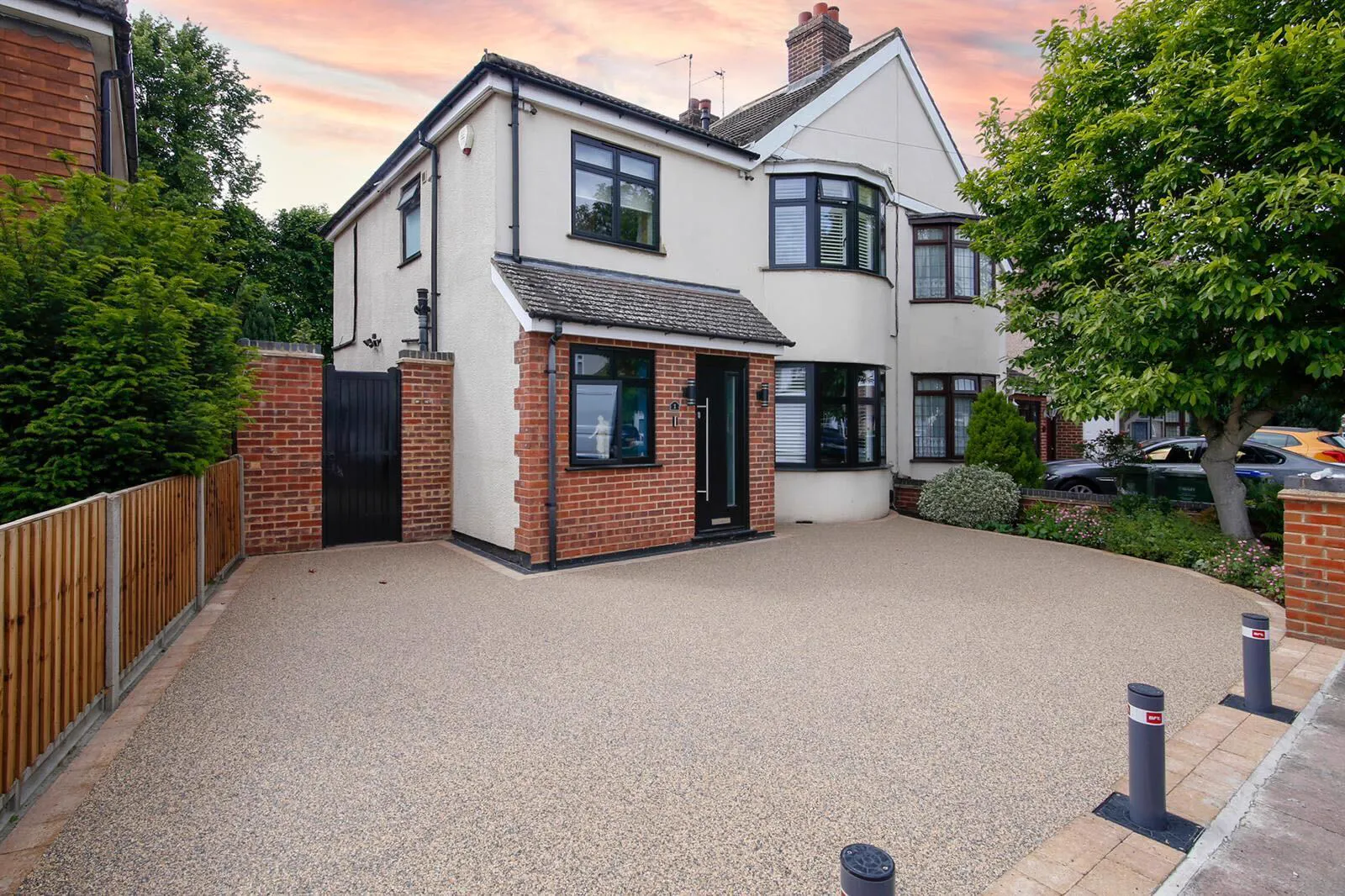
With resin bound, the aggregate stones and clear resin are mixed together before being trowelled onto a prepared base. Every stone is fully coated and locked in place. The result is a smooth, seamless surface where water drains straight through the gaps between stones.
- Fully permeable — SuDS compliant, no puddles
- Smooth finish — comfortable underfoot, wheelchair and pushchair friendly
- No loose stones — every aggregate is locked in the resin matrix
- UV stable — clear resin won’t yellow over time
- 25+ year lifespan with proper installation
How Resin Bonded Works
Resin bonded takes the opposite approach. A layer of resin is spread onto the surface first, then loose aggregate stones are scattered on top and pressed down. Only the bottom of each stone touches the resin.
- Not permeable — the resin layer underneath blocks drainage
- Textured, rougher finish — closer to a tarmac feel
- Loose stones — the top stones aren’t fully bonded and shed over time
- Shorter lifespan — typically 8–12 years before significant wear
- Usually cheaper upfront — but the ongoing maintenance and earlier replacement cost more long-term
Side-by-Side Comparison
Here’s how they stack up on the things that matter most:
- Drainage: Resin bound is fully porous. Resin bonded needs separate drainage because water runs off the sealed surface.
- Planning permission: Because resin bound is permeable, most domestic installations fall under permitted development with no application needed. Resin bonded usually requires planning permission for front driveways.
- Loose stones: Resin bound has none. Resin bonded will always shed stones, especially in high-traffic areas and during hot weather when the resin softens.
- Appearance: Resin bound is smooth and uniform. Resin bonded has an uneven, more textured look.
- Cost: Resin bound costs more upfront than bonded, but lasts two to three times longer.
Why We Only Install Resin Bound
At ResinPro Cheshire, we made the decision early on to only install resin bound surfaces. It’s the better system in every way that matters: drainage, durability, appearance and long-term value.
We use exclusively Vuba resin products, which come with a 25-year guarantee. Every installation we do is backed by Vuba’s guarantee.
How to Tell Which One You’re Being Quoted For
If a company quotes you for “resin” without specifying bound or bonded, ask directly. Key questions:
- “Is the surface fully permeable?” — if yes, it’s resin bound
- “Are the stones mixed with resin before laying?” — bound = yes, bonded = no
- “What guarantee does the resin manufacturer offer?” — reputable bound products carry 15–25 year warranties
If the price seems significantly lower than other resin quotes, there’s a good chance it’s resin bonded rather than bound.
The Bottom Line
Resin bound costs more upfront but performs dramatically better over its lifetime. It drains properly, doesn’t shed stones, rarely needs planning permission, and lasts 25+ years. If you’re investing in a new driveway, it’s the system worth paying for.
Want to see resin bound installed in person? Browse our project gallery or get a free, no-obligation survey where we’ll bring samples to your door.